

Unlock Global Connectivity: Why eSIM Is the Smarter Choice for Travelers
Planning a trip abroad and dreading roaming fees? An eSIM for travel is a digital SIM card embedded directly in your phone, allowing you to connect instantly without swapping physical cards. Activating a local data plan involves simply scanning a QR code or using an app, providing convenient, cost-effective coverage. It lets you stay connected by purchasing and managing data plans from multiple providers right from your device.
Why Global Travelers Are Switching to Digital SIMs

Global travelers are switching to eSIMs for travel to eliminate the hunt for local SIMs at airports and avoid exorbitant roaming fees. A digital SIM lets you purchase and activate a data plan before departure, providing instant connectivity upon landing. This means no fiddling with tiny physical cards, no risk of losing your primary SIM, and the ability to keep your home number active. The decisive advantage is switching between regional providers on the fly, ensuring you always have the cheapest or fastest local network without needing to visit a shop. For constant movers, an eSIM turns a phone into a truly universal travel tool, offering flexible top-ups that align with trip duration rather than rigid contracts.
The hidden costs of physical roaming plans

Physical roaming plans often mask hidden overage charges that trigger upon crossing invisible data thresholds, converting affordable rates into staggering bills. You may face activation fees per country, daily connection surcharges, and inflated rates for tethering or VoIP calls. Roaming packages frequently expire within 24-hour windows, charging again mid-trip if you use data during a layover. Additionally, international carrier agreements embed unpredictable per-kilobyte rates for exceeding limits, with penalty tiers that activate without notification. These opaque costs make physical roaming more expensive than advertised, eroding budget control for frequent travelers.
How embedded SIM cards eliminate plastic waste
An embedded SIM (eSIM) physically removes the need for a plastic SIM card, instantly eliminating the petroleum-based card and its blister packaging from the travel cycle. Without a physical tray to swap, you never discard old cards after landing, nor do you generate waste from forgotten, expired chips. Each trip that uses an eSIM directly cancels out the production and disposal of one more plastic card, making your global connectivity a zero-waste travel upgrade. This shift means frequent flyers no longer accumulate drawers full of obsolete plastic, fully erasing that source of environmental clutter from the journey.
| Plastic SIM Waste Source | Eliminated by eSIM |
|---|---|
| Physical card (PVC) | No card produced |
| Foil carrier & plastic blister pack | No packaging needed |
| Disposal of expired/used cards | Zero physical disposal |
| Polyester-based SIM tray ejector tools | No tool required |
How Virtual Roaming Profiles Actually Work
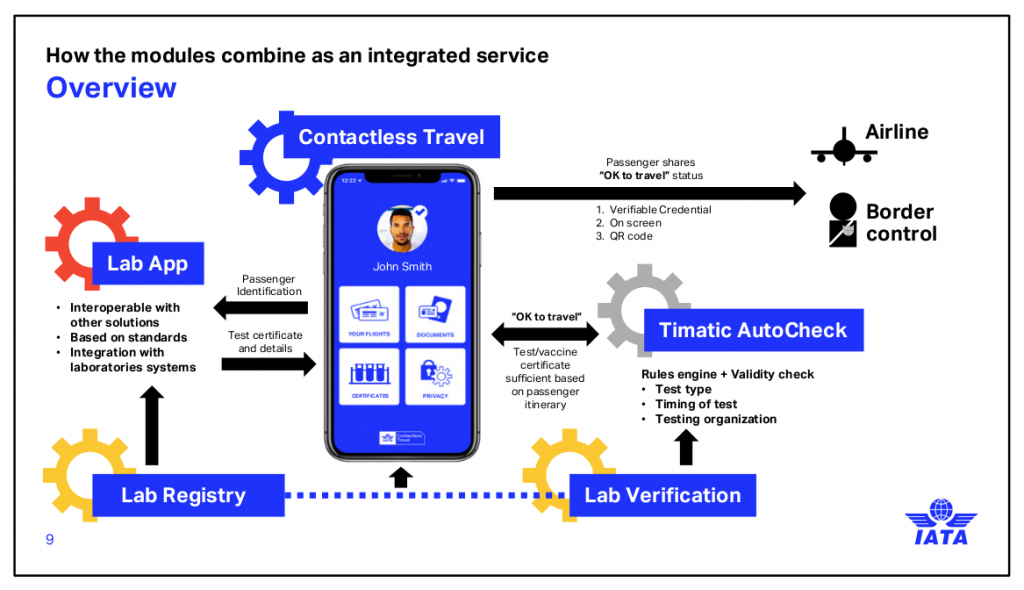
When you install an eSIM for travel, you are loading a virtual roaming profile onto your device’s embedded chip. This profile is a secure digital package containing your new number, authentication keys, and network settings for a specific host operator in your destination China eSIM country. Upon activation, your phone handles a handshake with that local network, which then routes your traffic back to the eSIM provider’s core network for billing and internet access. How does data stay secure? The profile encrypts your connection from device to local tower, and the provider often adds a second layer of VPN-like tunneling to its home gateway, preventing interception on foreign infrastructure. This works without physical SIM swapping, and you can manage multiple profiles for different regions through your phone’s settings menu, toggling which one is active for data use.
The difference between eSIM-compatible devices and legacy phones
An eSIM-compatible device stores a virtual roaming profile directly on its embedded chip, replacing a physical SIM card entirely. Legacy phones, lacking this chip, require you to swap plastic SIMs from local carriers when traveling, losing your home number in the process. With eSIM, you can add a travel data plan remotely before departure, while legacy phones demand a physical purchase and insertion. This distinction is most critical for frequent travelers who value keeping their primary line active.
Q: Can I use an eSIM roaming profile on a simple, older smartphone?
A: No. Legacy phones cannot host an eSIM profile; you must buy a traditional SIM or a pocket Wi-Fi device instead.
Why you don’t need to buy a local SIM at every airport
A virtual roaming profile eliminates the airport SIM hunt by pre-loading data connectivity before you depart. Once activated, it connects you to a local network automatically, bypassing physical queues, currency exchange for tiny SIM cards, and the risk of losing your primary number. Travel eSIM profiles can store multiple country plans simultaneously, letting you switch regions without swapping cards. This means no more fumbling with a paperclip at baggage claim or paying inflated kiosk prices. Activation is instant via QR code or app, keeping your phone usable from landing onward.
You skip airport SIM counters entirely because a virtual profile connects you to local networks before you arrive, without hardware swaps or physical purchases.

Best Destinations for Digital Roaming Right Now

For digital nomads seeking seamless connectivity, Estonia remains a top choice for esim for travel, offering instant activation in Tallinn and reliable 4G across its compact, wooded areas. Japan’s major cities provide exceptional coverage for visitors using local esim plans, with fast speeds in Tokyo and Kyoto’s busy districts. In Southeast Asia, Thailand excels with affordable, high-speed data on esim profiles, ideal for remote work from Chiang Mai’s cafes or Bangkok’s coworking hubs. For European roaming, Germany’s Deutsche Telekom network ensures consistent performance across urban and rural zones, while Spain’s Orange network delivers strong signals along coastal destinations. Always purchase an esim with local or regional data allowances to avoid throttling—these destinations prioritize practical digital access for travelers.
Top data-friendly regions with instant connectivity
For travelers prioritizing instant eSIM connectivity, Southeast Asia leads with near-seamless activation across Singapore, Thailand, and Malaysia, where local eSIM providers deploy 5G networks within seconds of purchase. Europe’s Baltic corridor—Estonia, Latvia, and Lithuania—offers robust LTE roaming with auto-provisioning upon landing, avoiding manual APN setup. Japan and South Korea similarly provide immediate profile downloads and carrier-switching via regional eSIMs, bypassing airport SIM queues. These regions share minimal latency (<30ms) 50 and consistent speeds exceeding mbps, ensuring data reliability from touchdown.< p>
Q: Which region guarantees the fastest instant connectivity upon arrival?
A: Southeast Asia, specifically Singapore, where eSIM activation triggers network registration in under 15 seconds and throughput averages 120 Mbps on local operators.
Countries where local carriers offer competitive eSIM bundles
For digital roaming, countries with strong local carrier eSIM bundles include Japan, South Korea, and Thailand. In Japan, carriers like NTT DOCOMO and KDDI offer affordable high-speed data packs directly via eSIM, avoiding expensive roaming fees. South Korea’s SK Telecom and KT provide competitive short-term tourist eSIMs with generous daily caps. Thailand’s AIS and TrueMove have budget-friendly multi-day plans perfect for travelers. These local options often beat global roaming passes in price and speed.
Q: Which country offers the cheapest local carrier eSIM for travel?
A: Thailand’s AIS often has the lowest rates for short stays, with data-only eSIMs starting under $5 for a week.
Choosing the Right Data Plan for Your Trip
Choosing the right eSIM for your trip hinges on matching data volume to your actual usage. Estimate your daily needs—streaming video demands far more than navigation or messaging. Select a regional plan if you are hopping between countries, as this often provides seamless connectivity at a lower cost than separate national plans. For a single destination, a local data package typically offers the best speeds and value. A critical nuance is evaluating the network priority; budget eSIMs may throttle speeds after a small daily cap, making a slightly pricier plan with higher priority data far more reliable for work or real-time translation. Always confirm activation requires no complex setup, just a simple QR code scan before you depart.
Comparing prepaid passes, regional buckets, and unlimited options
When comparing prepaid passes, regional buckets, and unlimited options for travel eSIMs, consider your data consumption pattern. Prepaid passes suit short trips with fixed, low usage. Regional buckets offer flexible capacity across multiple countries, providing better value than stacking single-country passes. Unlimited plans often throttle speeds after a fair-use cap, making them less ideal for constant tethering. Q: Which option minimizes waste for a 10-day trip splitting time between France and Spain? A: A regional bucket covering both countries, as it avoids overpaying for per-country passes and bypasses unlimited plan throttling. Evaluate daily usage to decide: under 1GB? Prepaid passes. Between 1-5GB? Regional buckets. Over 5GB? Unlimited, but expect speed caps.
How to avoid sneaky activation fees and hidden throttling
To dodge sneaky activation fees, always read the fine print during checkout—many providers tack them on after the first free trial. For hidden throttling, look for plans that guarantee full-speed data caps; avoid vague “unlimited” offers that slow you to 2G after a few GB. Before buying, search online for user reports of post-purchase speed drops. Stick to eSIM retailers that clearly state “no activation cost” and list exact throttle thresholds, so you’re not stuck with a sluggish connection mid-trip.
Step-by-Step Setup Without Technical Headaches
Activating an eSIM for travel eliminates physical SIM swaps. You purchase a plan from a provider, receive a QR code or download link via email, then scan it using your device’s cellular settings. No provider app is usually required; simply navigate to Settings > Cellular > Add eSIM and scan the code. The profile installs in under a minute, automatically applying your data allowance. A common concern: Q: What if the QR code scan fails? A: Most providers also offer a manual entry option where you input an SM-DP+ address and activation code directly into your phone’s settings, bypassing the need for a stable internet connection during setup. After a quick reboot, your travel data is active, and your primary home line can remain on for calls or SMS without conflict.
Scanning a QR code versus manual carrier profile installation
Scanning a QR code versus manual carrier profile installation presents a clear trade-off in setup speed versus control. QR code scanning is almost instant, requiring only your phone’s camera to automatically download and apply the eSIM profile—ideal for last-minute travel activation. Manual installation, while slower, allows you to verify each APN setting or MNC code if the QR code fails or is incompatible. QR code versus manual installation hinges on reliability: scanning reduces entry errors, but manual steps give you troubleshooting access. Q: Which method is more reliable when switching networks mid-trip? A: Scanning a new QR code from your provider is faster and less error-prone, but keep a manual profile backup if your device lacks camera auto-detect.
Managing multiple lines on a single smartphone
Juggling travel data and your home number is simple with an eSIM. You can keep your primary line active for calls and texts while assigning a separate travel eSIM for mobile data. Just go to your phone’s cellular settings, label each plan clearly (e.g., “Home” and “France Trip”), and set the travel line as the default for data. Most phones let you turn off the secondary line entirely when not needed, saving battery. This dual-SIM setup means you never have to swap physical cards. Managing multiple lines on a single smartphone becomes a quick toggle in your settings.
Keep your home number live for calls while a travel eSIM handles all your data—no card swapping needed.
Privacy and Security Advantages Over Plastic Cards
An eSIM for travel eliminates the physical plastic card, removing the risk of loss, theft, or cloning that exposes your data and number. Unlike a SIM card that can be ejected and read, an eSIM is embedded and locked to your device, making remote hijacking far more difficult. Q: How does an eSIM protect my privacy better than a plastic card? A: A plastic card can be physically removed and inserted into another phone to track you or intercept SMS codes; an eSIM cannot be physically extracted, so your line stays secure even if your phone is stolen. This permanent binding also prevents local carriers from skimming your personal details from the card’s surface, ensuring your travel identity remains isolated and encrypted.
Why remote provisioning reduces theft risk
Remote provisioning eliminates the physical eSIM card, thereby removing the primary theft vector: a tangible, high-value item easily lifted from a pocket or bag. With no card to extract, a thief cannot simply swap the SIM into another device to hijack the traveler’s number or drain prepaid balances. The stolen phone itself becomes a dead terminal, as the eSIM profile is cryptographically tethered to its original device and cannot be reinstalled on an unauthorized handset. Furthermore, if the traveler remotely wipes the phone, the eSIM data is irretrievably deleted alongside it, severing any chance of fraudulent use. This makes remote eSIM provisioning inherently more theft-resistant than a separate plastic card that can be grabbed and reused instantly.
Keeping your home number active while using a travel data line
Keeping your home number active while using a travel data line is a key privacy advantage over plastic SIM swapping. With an eSIM, you assign only the travel data line for mobile internet, while your primary home number remains idle but connected to your carrier. This prevents your personal number from being broadcast on foreign networks, reducing exposure to spam or data harvesting. Dual-SIM standby functionality lets you receive SMS for two-factor authentication on your home number without incurring roaming charges, as data flows solely through the travel eSIM. Logistics require checking that your phone supports DSDS (Dual SIM Dual Standby) and that your home carrier permits inactive roaming while retaining service.
How do I ensure my home number does not accidentally use roaming data when a travel eSIM is active? Go to your phone’s cellular settings, select your home number as the default line for voice and SMS only, then disable “Data Roaming” for that line. Set the travel eSIM as the exclusive data line. This isolates your home number to calls and texts over Wi-Fi or the eSIM’s data if you enable Wi-Fi Calling.
Troubleshooting Common Connectivity Snags
You land in Tokyo, tap your eSIM activation, and get nothing—no bars. First, ensure your phone’s data roaming is toggled on specifically for that eSIM line; a common misstep is leaving it off. If you see the carrier name but no internet, manually select your eSIM’s network under “Mobile Networks” instead of leaving it on “Automatic.” For persistent drops, toggle Airplane Mode for thirty seconds—a simple force-reset to the local tower.
A forgotten APN entry is the silent killer; verify the exact values from your provider’s setup guide, as a single wrong character blocks all data.
At a bustling café in Rome, I once fixed my connection by simply reseating the eSIM—deleting and re-downloading the profile solved the ghost-network issue that nine reboots failed to fix.
What to do when your profile fails to download
When your eSIM profile fails to download during travel, first ensure a stable internet connection via Wi-Fi or another active data source, as the download requires continuous bandwidth. Manually enter the activation code provided by your carrier, or scan the QR code again from your purchase confirmation email—avoid using screenshots if lighting is poor. Reboot your device to clear temporary network glitches, then navigate to your phone’s cellular settings and select “Add eSIM” again. If errors persist, verify that your device model supports the specific eSIM profile; some carriers require an unlocked handset. Contact your provider’s support within 24 hours, as activation codes often expire.
Handling poor signal in remote or congested areas
In remote or congested areas, poor signal with an eSIM often stems from network congestion or geographic barriers. Manually select a different local network operator via your device settings to bypass overcrowded towers or connect to a stronger, distant cell. Disable 5G and force your phone to 4G LTE or 3G, as lower frequencies travel farther and penetrate obstacles like mountains or dense buildings. Position your device near a window or higher ground for line-of-sight. If signal stalls completely, pre-download offline maps and messaging app data as a fallback.
Manually switching networks and downgrading to 4G/3G are the most effective steps when handling poor signal in remote or crowded locations.
Cost-Saving Hacks for Frequent Jet-Setters
Frequent flyers can slash roaming fees by using an eSIM for travel, ditching costly physical SIM swaps at airport kiosks. Pre-purchasing regional or global data bundles from specialized eSIM providers often costs 70–90% less than standard carrier plans. Buying annual multi-country eSIM subscriptions unlocks the lowest per-gigabyte rates, ideal for those visiting the same regions repeatedly. Sticking to messaging apps over cellular voice calls further conserves expensive data. To avoid surprise charges, disable data roaming on your primary SIM entirely and set the eSIM as default for mobile data. Comparing provider pricing for your specific destination before departure ensures you never overpay for connectivity.
Leveraging loyalty rewards from mobile network operators
Turn your mobile operator’s loyalty points into free travel data by checking if your rewards program offers eSIM credits or roaming passes. Many carriers let you redeem points for short-term data packages, so you can activate an eSIM without spending cash. Prioritize your airline alliance partnerships—some operators bundle eSIM perks with loyalty tiers, giving you complimentary global data on your existing plan. Always scan your rewards dashboard before a trip; unused points often cover an eSIM’s full cost, effectively making connectivity a zero-expense benefit.
When to buy pre-trip versus on-arrival data bundles
For frequent jet-setters, the choice between pre-trip and on-arrival bundles depends on your risk tolerance. Buy a pre-trip eSIM when you have a tight connection or arrival late at night, ensuring instant data upon landing. Conversely, purchase on arrival during layovers if local carriers offer significantly cheaper regional data, but only if you have reliable airport Wi-Fi to activate it. Avoid on-arrival plans for multiple country trips, as pre-trip regional bundles eliminate multi-SIM hassle.
Buy pre-trip for guaranteed connectivity and multi-destination ease; buy on arrival only when a local plan is drastically cheaper and you have immediate Wi-Fi access.
What’s Next for Seamless Cross-Border Roaming
The next step for seamless cross-border roaming with eSIM for travel is the integration of dynamic switching, where your device automatically selects the strongest local network across borders without requiring manual profile swaps. Q: What feature will eliminate the need to manually activate eSIM profiles when crossing borders? A: Dynamic network switching. This advancement will allow a single eSIM profile to hold multiple carrier agreements, enabling instant, uninterrupted connectivity as you move between countries, with data sessions staying active during transitions rather than resetting.
The rise of multi-network aggregators
Multi-network aggregators are eliminating the gamble of weak signals by bundling several local carriers into a single eSIM profile. Instead of manually switching providers abroad, a traveler’s device automatically selects the strongest live network between, for example, a German, a French, and a Dutch operator—all within one active plan. This means you maintain true seamless roaming across borders without re-provisioning or hunting for Wi-Fi. If congestion slows one carrier, the aggregator instantly shifts your connection to a faster one. For the traveler, the result is uninterrupted video calls and maps in dense urban centers or remote transit zones, all managed invisibly behind a single purchase.
How satellite eSIMs could change remote travel
Satellite eSIMs transform remote travel by providing instant connectivity beyond cell towers, allowing you to navigate, share live location, and contact emergency services from any wilderness. No more hunting for Wi-Fi in valleys or climbing peaks for a signal—your device automatically switches from terrestrial to satellite networks. This practical feature lets you freely explore off-grid destinations while maintaining essential communication for safety and coordination. It eliminates the anxiety of losing coverage abruptly during a hike or road trip through sparse regions.
Satellite eSIMs ensure you stay reachable and informed anywhere on Earth, turning remote travel from a risky venture into a reliably connected experience.